API Keys
The API Keys page in the Profile section of Signotaur allows you to manage your API keys, including creating new keys, regenerating, or deleting existing ones.
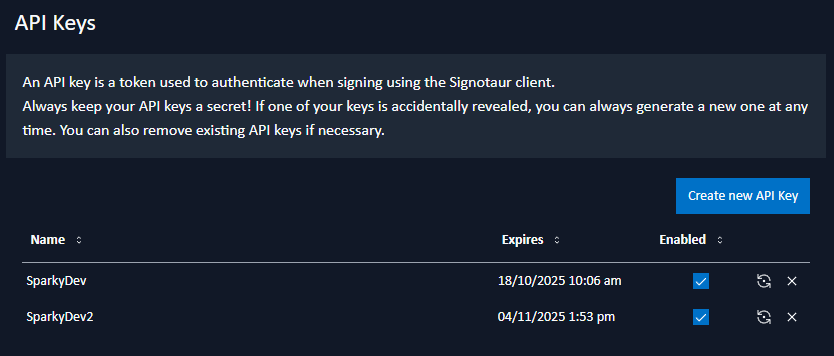
A sortable table displays all existing API keys.
See Also: For comprehensive information about API key lifecycle and rotation strategies, see API Key Lifecycle. For CLI workflows including key rotation, see API Key Management.
Creating a New API Key
To create a new API key, click the Create new API key button. A dialog will appear where you can enter the following details:
- Name: A descriptive name for the API key.
- Expires: Select the number of days until the API key expires from the dropdown list.
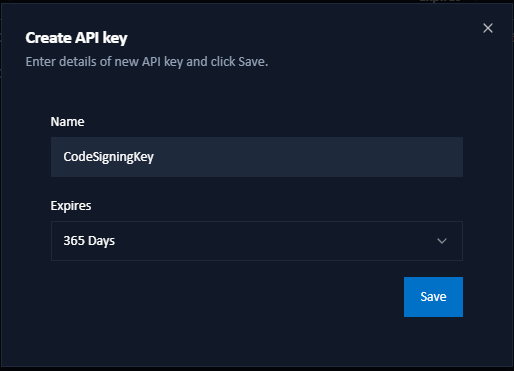
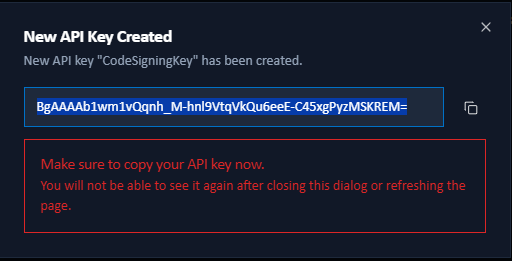
After clicking Save, a new API key will be generated and displayed in a dialog. You can copy the key for use with the Signotaur client tool command line.
Ensure that you copy and store the key in a safe place, as you will no longer have access to it once the dialog is closed.
Enabling/Disabling an API Key
To enable or disable a API key, toggle the checkbox in the Enabled column of the API Keys table.
Regenerating an API Key
To regenerate an API key, click the Regenerate API key button next to its entry. A dialog will appear with the following options:
- Change Expiry Date: Check this box to show the input for updating the key's expiry date.
- Expiry: Select the number of days from the dropdown list to update the key's expiry date.
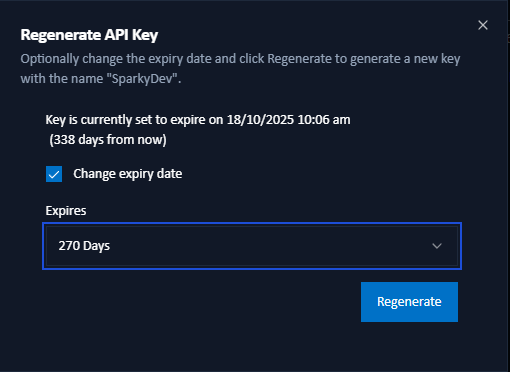
After clicking Regenerate, a new API key will be generated and displayed in a dialog. You can copy the key for use with the Signotaur client tool command line.
Ensure that you copy and store the key in a safe place, as you will no longer have access to it once the dialog is closed.
Regenerating an API key will render the old key unusable for all future requests.
Cleaning Up API Keys
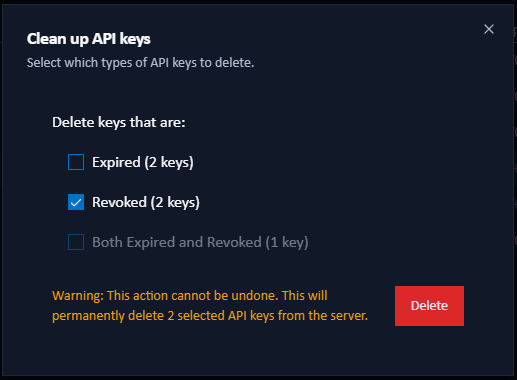
The Clean up button appears in the API Keys table header when there are expired or revoked keys present. This feature allows you to bulk-delete multiple keys at once rather than removing them individually.
Clicking Clean up opens a dialog with three checkbox options, each displaying a count of matching keys:
- Expired — keys that are past their expiration date.
- Revoked — keys that have been disabled.
- Both Expired and Revoked — keys that are both expired and revoked. This option cannot be combined with the individual Expired or Revoked options.
Select the categories of keys you want to remove. Click Delete to proceed with the removal.
This action is permanent and cannot be undone.
Deleting an API Key
To permanently remove an API key, click the Delete button next to its entry. A confirmation dialog will appear to confirm the deletion.
Deleting an API key will revoke its access and render it unusable for all future requests.